
RESTCON 2026
2026 2nd International Conference on Robotics, Engineering, Science, and Technology
Fukuoka International Congress Center, Fukuoka, Japan
November 4-6, 2026
Please note that the schedule is tentative and subject to change without notice. We recommend checking back regularly for the latest updates.
About RESTCON
RESTCON 2026 is the 2nd International Conference on Robotics, Engineering, Science, and Technology, taking place in Fukuoka, Japan, from November 4-6, 2026.
Building on the success of RESTCON 2024 in Pattaya, Thailand, this event will feature cutting-edge presentations, inspiring keynotes, and excellent networking opportunities.
View the RESTCON 2024 proceedings on Scopus and IEEE Xplore here
Important Dates
| Abstract Submission Abstract Submission Guidelines | by August 2, 2026 |
| Abstract Acceptance | by August 7, 2026 |
| Full Paper Submission (4-10 pages, A4, file size limited to 10MB) Full Paper Template | by September 7, 2026 Submission Here! |
| Acceptance Notification | by September 24, 2026 |
| Early Bird Registration and Payment | by October 1, 2026 Payment Here! |
| Regular Registration and Payment | by October 10, 2026 |
| Final (Camera-Ready) Paper | by October 23, 2026 |
Instructions for presenters
- Presenters are requested to test their presentation slides and laptop with the projector before their session begins. The 20-minute coffee break between sessions is a good opportunity to perform this check. Please make sure that your slides are displayed properly and that your laptop works correctly with the projector to avoid any technical issues or delays during your presentation.
- Each presentation is allocated 20 minutes: 15 minutes for the presentation and 5 minutes for Q&A. Please strictly observe the allotted time. In particular, presentations that are significantly shorter or longer than 15 minutes may negatively affect the evaluation for the Best Presentation Award.
- RESTCON2026 will not provide laptops for presentations. Please bring your own laptop.
- If you are unable to bring your own laptop, please bring your presentation file on a USB flash drive or external storage device and ask the presenter before or after you in the same session if you may use their laptop.
- Please ensure that your laptop can be connected to the projector via HDMI or VGA. If your laptop does not have an HDMI or VGA port, please bring the appropriate adapter.
Invited Speakers

Dr. Sergio Chiva Vicent
Professor
Universitat Jaume I (UJI) in Castellón de la Plana, Spain
Title:
“From CFD to Digital Twins: Integrating Physics, Data and Artificial Intelligence for Real-Time Engineering”
Abstract:
Computational Fluid Dynamics (CFD) is a powerful tool for understanding complex engineering systems, but its computational cost often limits real-time prediction, optimization, and control. At the same time, modern facilities generate large amounts of data through sensors and monitoring systems. The challenge is therefore not to choose between physics-based modelling and artificial intelligence, but to combine them effectively. This lecture presents a hybrid approach in which high-fidelity CFD provides detailed physical knowledge, while AI-based surrogate models reproduce the most computationally expensive parts of the solution at a fraction of the cost. Physical transport, conservation, and process equations are retained to ensure consistency and robustness. Examples from wastewater treatment and environmental fluid mechanics will show how these models can be connected to real-time data, transforming CFD from an offline analysis tool into a dynamic digital twin for prediction, optimization, and engineering decision-making. This enables faster, safer, and more sustainable industrial operation.
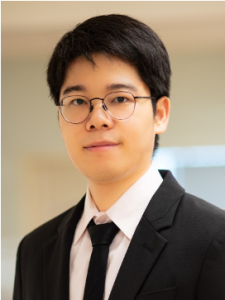
Dr. Maroay Phlernjai
Assistant Professor
School of Manufacturing Systems and Mechanical Engineering Sirindhorn International Institute of Technology (SIIT), Thammasat University
Thailand
Title:
” From Math to Motion: Interactive Mechanism Design in Modern Workflows and Education “
Abstract:
Turning kinematic theory into a mechanism that moves as intended is a hard step for students and early-career engineers. Graphical methods analyze a mechanism one position at a time, and analytical methods need lengthy vector-loop equations to cover the whole cycle. Dynamic effects and forces also decide the choice of joints, bearings and supports. This talk shows how interactive design tools can support these decisions for the kinematics and dynamics of linkages and cams: where a mechanism binds, how large its joint forces are, and how small a cam can be. The examples use LinkLab and CamLab (mechsim.dev), free, open-source tools I developed with AI coding assistants, which support the mechanical design workflow and serve as teaching aids for Mechanics of Machinery.

Dr. Yoann Cheny
Associate Professor
Laboratory of Energetics and Theoretical and Applied Mechanics University of Lorraine
Fracnce
Title:
” Solving Inverse Problems in Fluid Mechanics with Physics-Informed Neural Networks “
Abstract:
Many problems in engineering science share a difficult feature: the governing physics is only partially known, and experimental data is scarce or noisy. Classical simulation methods such as CFD are mature and accurate but require a complete description of the physics and are computationally demanding, while purely data-driven machine learning is data-hungry and yields non-physical predictions. Physics-Informed Neural Networks (PINNs) bridge this gap by embedding physical laws – expressed as partial differential equations – directly into the training of a neural network, making them well suited to the ubiquitous regime of limited physics and limited data.
This talk gives a self-contained introduction to PINNs, from the underlying principles to their practical implementation, and illustrates their power on two engineering applications: recovering three-dimensional gravity currents from sparse experimental data and identifying rheological parameters in granular flows. Together these examples show how PINNs offer a robust, GPU-efficient alternative to classical data assimilation.
Registration Fee
| Regular by October 10, 2026 | Early-bird by October 1, 2026 | |
| Non-student | JPY 30,000 | JPY 25,000 |
| Student | JPY 20,000 | JPY 15,000 |
| Audience & Attendee | JPY 15,000 | JPY 10,000 |
Information Required under the Act on Specified Commercial Transactions
Program
Local Time: Japan Standard Time (JST, UTC/GMT +9 hours)
Please note that the schedule is tentative and subject to change without notice. Some activities may incur additional fees; detailed information will be provided as the event approaches. We recommend checking back regularly for the latest updates.
Organizers & Partners






Contact
Information & Support
Website: restcon.org